Dynamic Hip Screw Failure Analysis
Dynamic Hip Screw Failure Analysis
Dynamic Hip Screw Failure Analysis
This project analyzed the failure behavior of a Dynamic Hip Screw (DHS) system used to stabilize sub-trochanteric femur fractures. Using high-fidelity CAD modeling and FEA, I replicated real-world loading conditions to identify stress concentrations and propose design modifications to improve implant durability.
This project analyzed the failure behavior of a Dynamic Hip Screw (DHS) system used to stabilize sub-trochanteric femur fractures. Using high-fidelity CAD modeling and FEA, I replicated real-world loading conditions to identify stress concentrations and propose design modifications to improve implant durability.




Technical Insights
Technical Insights
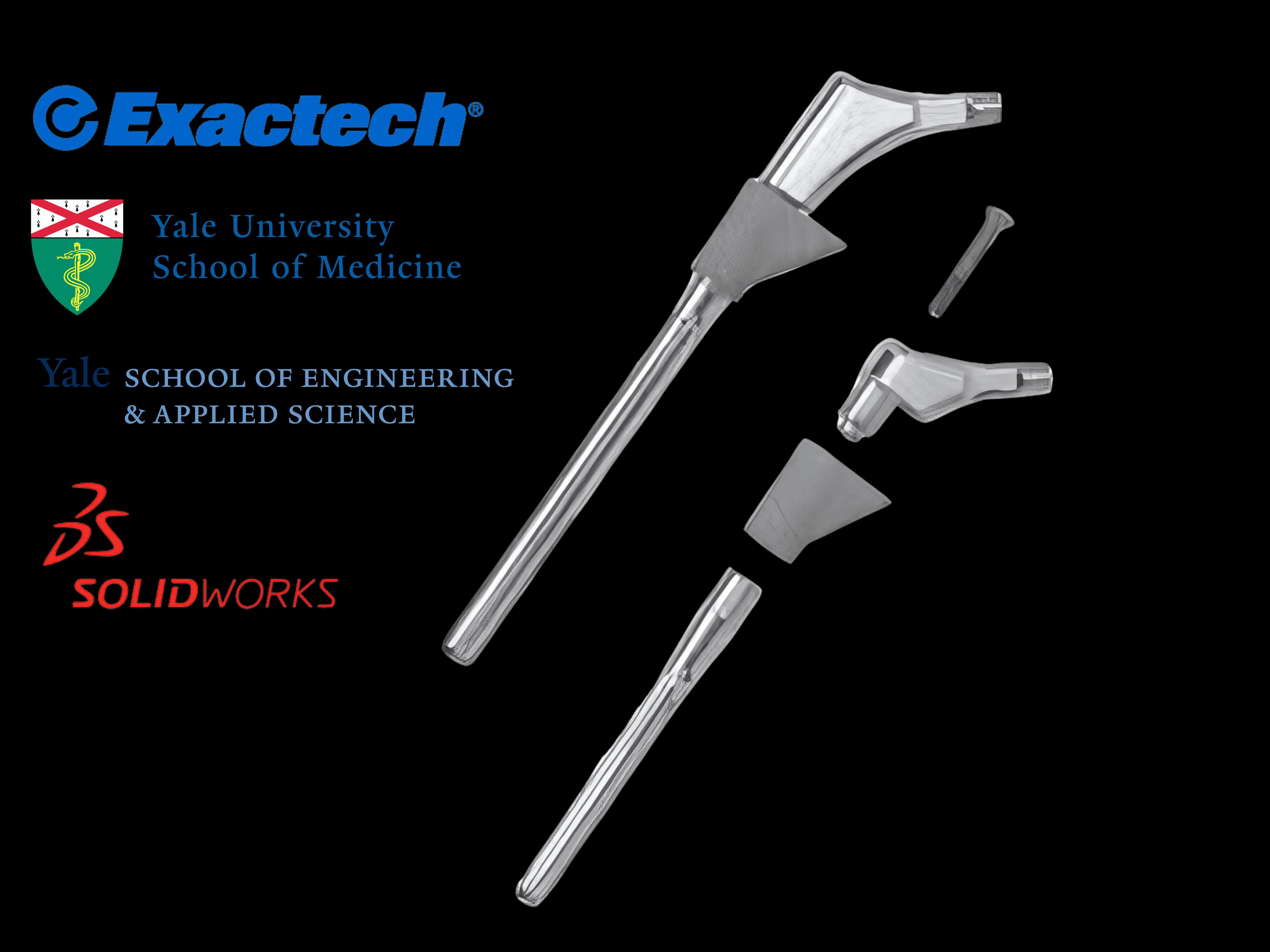
Modeled the DHS implant geometry in SolidWorks, referencing real hardware to ensure anatomical accuracy.
Used a femoral shell representing cortical bone thickness and sectioned it to model a realistic fracture.
Applied loading conditions derived from orthoload.com to simulate forces acting on the femoral head during gait and stance.
Ran static structural FEA to evaluate stress behavior across the plate, screws, and surrounding material.
Modeled the DHS implant geometry in SolidWorks, referencing real hardware to ensure anatomical accuracy.
Used a femoral shell representing cortical bone thickness and sectioned it to model a realistic fracture.
Applied loading conditions derived from orthoload.com to simulate forces acting on the femoral head during gait and stance.
Ran static structural FEA to evaluate stress behavior across the plate, screws, and surrounding material.
Design Highlights
Design Highlights
Achieved a simulation output that reproduced documented failure behavior—highest stresses localized in the plate and neck.
Modified the implant’s plate width and curvature to improve conformity to the bone and reduce stress peaks.
Visualized stress flows and deformation fields to understand mechanical vulnerabilities.
Achieved a simulation output that reproduced documented failure behavior—highest stresses localized in the plate and neck.
Modified the implant’s plate width and curvature to improve conformity to the bone and reduce stress peaks.
Visualized stress flows and deformation fields to understand mechanical vulnerabilities.
challenges and impact
challenges and impact
Challenge: Accurately modeling both the fracture geometry and physiological load transfer from femur to implant.
Impact: Demonstrated how computational modeling can preemptively detect design flaws and inform safer orthopedic implant iterations.
Proven consistency with failure history data validated the quality of the simulation approach.
Challenge: Accurately modeling both the fracture geometry and physiological load transfer from femur to implant.
Impact: Demonstrated how computational modeling can preemptively detect design flaws and inform safer orthopedic implant iterations.
Proven consistency with failure history data validated the quality of the simulation approach.
Skills and Tools
Skills and Tools
SolidWorks CAD · SolidWorks Simulation · FEA · Orthopedic Biomechanics · Failure Analysis · Anatomy-Informed Modeling · Mechanical Design
SolidWorks CAD · SolidWorks Simulation · FEA · Orthopedic Biomechanics · Failure Analysis · Anatomy-Informed Modeling · Mechanical Design
Content